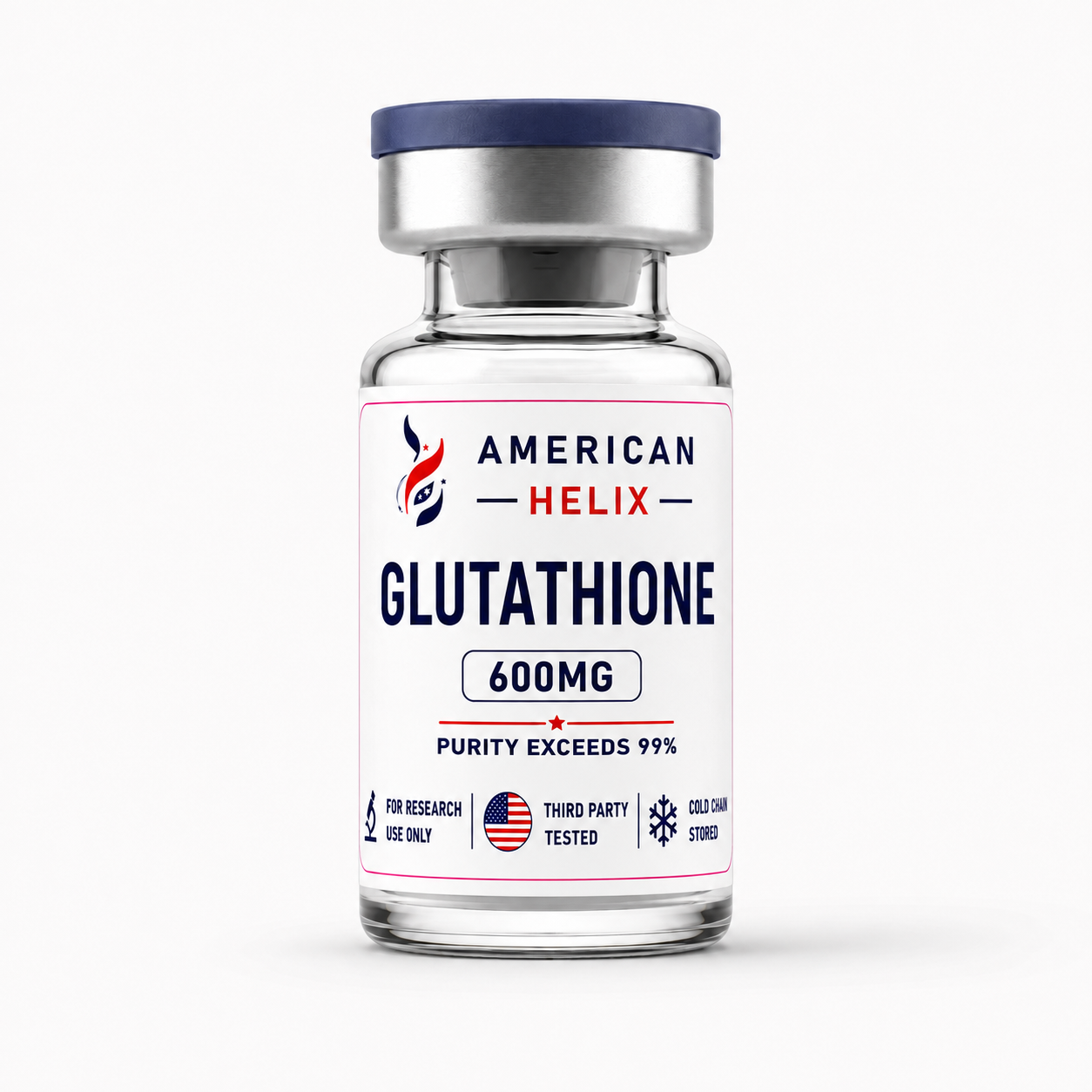
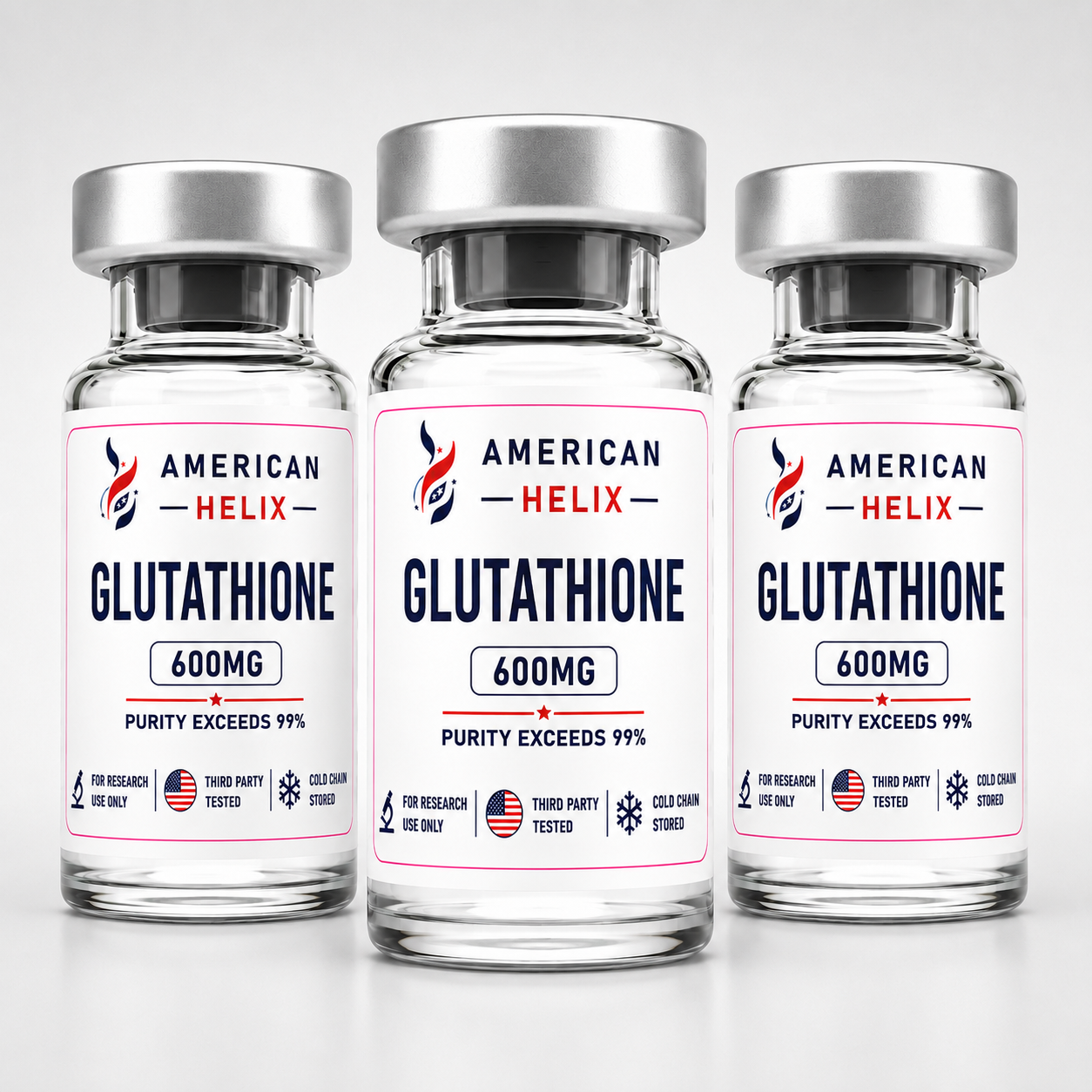
Glutathione
From $35.00
Glutathione (Reduced L-Glutathione) – Research Grade
Synthetic tripeptide (Gamma-L-Glutamyl-L-cysteinylglycine) with a free thiol group. CAS: 70-18-8. Molecular Weight: ~307.33 g/mol. Purity ≥98% verified by HPLC. For in-vitro laboratory research applications only. Not for human or veterinary use.
Product Overview
Glutathione, also known as Reduced L-Glutathione or Gamma-L-Glutamyl-L-cysteinylglycine, is a synthetic tripeptide consisting of three amino acid residues: Glutamic Acid, Cysteine, and Glycine. The peptide features a unique gamma-peptide bond between the gamma-carboxyl group of the glutamate side chain and the amino group of cysteine, rather than a standard alpha-peptide bond. The molecule contains a free thiol (sulfhydryl) group.
Technical Specifications
| Chemical Name | Gamma-L-Glutamyl-L-cysteinylglycine (reduced form) |
|---|---|
| Sequence (Abbreviated) | Gamma-Glu-Cys-Gly |
| CAS Number | 70-18-8 |
| Molecular Formula | C₁₀H₁₇N₃O₆S |
| Molecular Weight | ~307.33 g/mol |
| Purity (HPLC) | ≥98% |
| Physical Form | Lyophilized powder |
| Vial Content | 10 mg |
Structural Context
Glutathione is a tripeptide characterized by an atypical gamma-peptide linkage connecting the gamma-carboxyl group of Glutamic Acid to the amino group of Cysteine. This structural arrangement distinguishes it from standard alpha-peptide bonds. The presence of a free thiol group on the cysteine residue provides a redox-active moiety suitable for oxidation-reduction titration studies. The molecule also contains primary amine groups and carboxylic acid groups, contributing to its high aqueous solubility. This defined molecular architecture makes the compound suitable for analytical method development, chromatographic reference studies, spectrophotometric quantification, and stability profiling under varying pH and temperature conditions in controlled laboratory environments.
Handling and Storage
The product is supplied in lyophilized powder form. For optimal stability, store lyophilized material at or below -20°C. Protect from light, moisture, and exposure to oxidizing conditions. Avoid repeated freeze-thaw cycles.
Research Applications
This product is manufactured and supplied as a chemical reference standard for in-vitro laboratory research applications including analytical method development, chromatographic reference studies, stability assessments, and redox titration studies in controlled laboratory environments.
| Glutathione | Glutathione 600 |
|---|---|
| Glutathione Pack | 1 Pack, 3 Pack |
Related products
-
Connective Tissue Assays
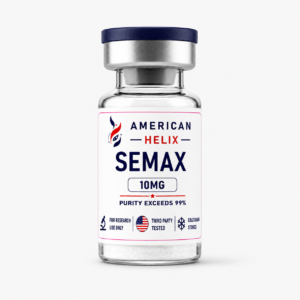
Semax
From $72.00 Select options This product has multiple variants. The options may be chosen on the product page -
Connective Tissue Assays
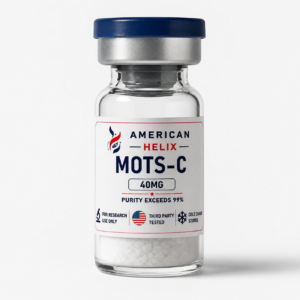
MOTS-C
From $195.00 Select options This product has multiple variants. The options may be chosen on the product page -
All Reference Standards
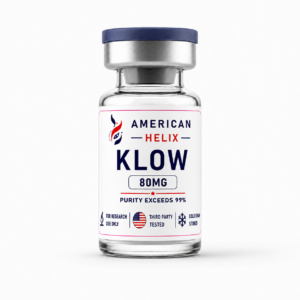
KLOW
From $125.00 Select options This product has multiple variants. The options may be chosen on the product page -
All Reference Standards
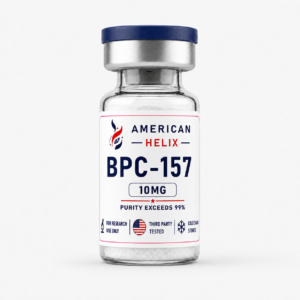
BPC-157
From $61.00 Select options This product has multiple variants. The options may be chosen on the product page